


Accepted the peer review invitation? That’s great! You are about to make a valuable contribution to scholarly knowledge. Did you know that the window between accepting a peer review invitation and beginning the first read of a manuscript is more important than most peer reviewers realize? Irrespective of your experience as a reviewer, a little preparation at this stage can help you approach the manuscript with clarity, set realistic expectations for your time, and avoid common roadblocks that could slow reviewers down.
This guide focuses on small but meaningful steps that could enable you to deliver a fair, constructive, and timely review while respecting the efforts of the authors and the trust placed in you by the journal.
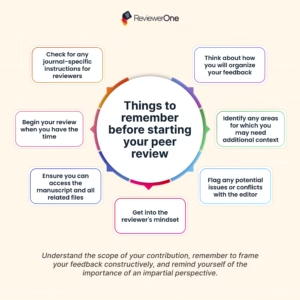
Before you begin reviewing a manuscript:
continue reading
1.Check for any journal-specific instructions for reviewers
Before diving in, go over the journal’s instructions for reviewers. Every journal has its own set of expectations and guidelines from peer reviewers. Understanding these early on will help you save time.
2.Begin your review when you have the time
Peer review is voluntary, but the responsibility is real. If the manuscript is long, highly technical, or requires careful reading of supplementary files, before starting to review, take a moment to consider when you will realistically be able to make progress. Reviewers often underestimate the amount of time a thoughtful evaluation requires. Planning ahead helps you avoid rushed assessments and builds trust with the journal. If something unexpected comes up, communicate this early to help the editorial team adjust without pressure.
3.Ensure you can access the manuscript and all related files
Before you begin reading closely, check the submission materials to confirm that you have and are able to access all the files. In addition to the manuscript, this could include figures, tables, or supplementary data. If something looks incomplete or is unreadable, it is better to alert the editorial office before you start the review.
4.Think about how you will organize your feedback
Some reviewers prefer to make notes as they read. Others create a brief outline of major concerns before drafting their report. Many reviewers find it helpful to separate their comments into two parts:
- Major observations that affect interpretation, rigor, or validity
- Minor observations that relate to clarity or presentation
Identify the method that works best for you and helps you stay focused and clear. This small step could make your review more structured and useful for both editors and authors.
5.Identify any areas for which you may need additional context
Before beginning your deep dive, consider whether you would need to refresh your knowledge of a method, a statistical approach, or a recent paper in the field. Doing this early could help you provide clearer, more authoritative comments.
6.Flag any potential issues or conflicts with the editor
Peer review depends on fairness and transparency. If you notice a potential conflict of interest, prior collaboration, or strong personal bias, share this with the editor before proceeding.
7.Get into the reviewer’s mindset
Before your first read, mentally anchor yourself to:
- Understand the scope of your contribution
As a reviewer, your role is to help the editor reach a clear decision and to guide the authors toward strengthening their work. Your expertise and balanced evaluation are what matter most.
- Frame your feedback constructively
Each manuscript represents months, even years, of research. Peer reviews are not only about identifying weaknesses. They are essentially about recognizing strengths, offering clear suggestions, and helping authors highlight their contributions to the field. The most valued reviewers are those who balance critique with empathy. Bearing this in mind will help you adopt a constructive tone from the start.
- Maintain an impartial perspective
Peer review works only when reviewers approach a manuscript with fairness, clarity, and an open mind. If you sense a bias creeping in, or if you have a connection that could influence your judgement, it’s better to acknowledge it upfront. When you remind yourself of the value of objectivity before you begin, your feedback becomes not only more credible but also more helpful to both editors and authors.
Starting a peer review with intention could help you evaluate a manuscript thoroughly and clearly, reduce unnecessary delays, and contributes to a more respectful review process for authors and editors. Whether you are an experienced reviewer or have just begun your journey as a reviewer, taking time to prepare before you begin your review can significantly influence the quality and usefulness of your review.







Leave a Comment