Peer reviewer selection: Why qualified researchers get overlooked
Peer reviewer selection shapes who gets the opportunity to contribute to peer review, build reviewing experience, and become visible within academic publishing.
Field guides, editorial perspectives, industry updates, and perspectives from the team and the wider reviewer community.
"We need to move beyond the accept/reject binary in peer review" by George Currie and Damian Pattinson, originally published on LSE Blogs, licensed under CC BY 4.0. No changes made.
Scholarly publishing continues to evolve as researchers, publishers, editors, and peer reviewers navigate the growing role of artificial intelligence and changing expectations around peer review.
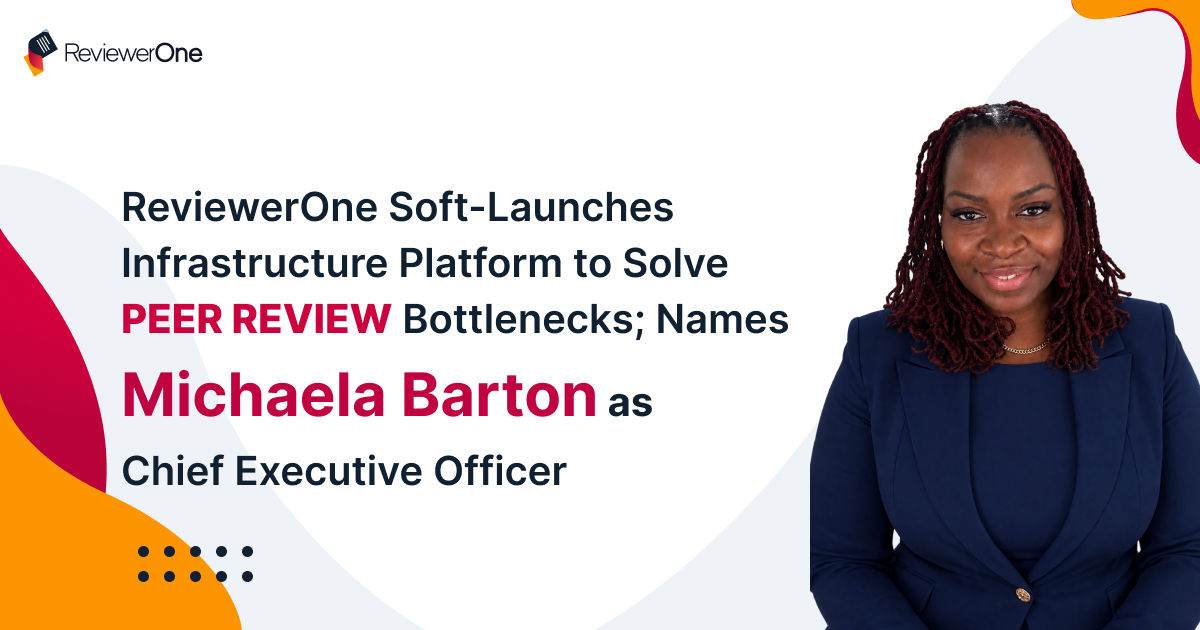
ReviewerOne, a reviewer-focused platform incubated by Nova Techset, has soft-launched its ecosystem designed to expand and support global peer review capacity. Concurrently, the venture has appointed scholarly publishing leader Michaela Barton as Chief Executive Officer.
In a large field, learning how to peer review a paper often means working alongside several other researchers with similar expertise. In a highly specialized area, the situation can be different.
Research is produced across countries, disciplines, languages, career stages, and institutional settings. The people evaluating that research are just as varied.
Reviewer disagreement is a normal part of peer review. Two qualified experts can read the same manuscript and reach different conclusions about its methods, significance, or suitability for publication.
In this round-up, we look at four recent discussions shaping the conversation around peer review, research integrity, and the growing role of AI in scholarly publishing. From rethinking how research is evaluated to tightening safeguards against manipulation and setting clearer boundaries for AI use, these developments reflect a publishing ecosystem adapting to rapid change.
Peer review has always depended on a remarkable assumption: that researchers will continue giving their time, expertise, and intellectual effort to evaluate the work of others, often alongside demanding research, teaching, clinical, and administrative responsibilities.
There is no single number that works for every researcher, but a useful starting point is to balance your peer review workload with publication activity, available time, field expectations, and the quality of each manuscript review.
One curated essay, one product change, one resource — written for people who actually do the work.