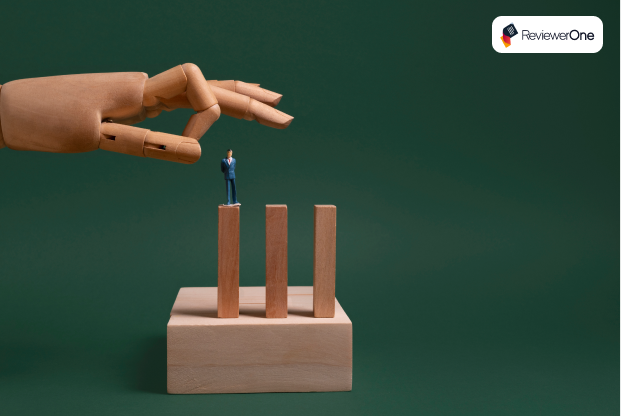
Rejection in academia is structural not personal
“Rejection in academia is structural not personal” by Tara-Lyn Camilleri & Ed Ivimey-Cook, originally published on LSE Blogs, licensed under CC BY 4.0. No changes made.
Field guides, editorial perspectives, industry updates, and perspectives from the team and the wider reviewer community.
The scholarly publishing landscape continues to evolve through new research, discussions on transparency, and reflections on the publishing process. This roundup highlights three recent publications that examine editorial decision-making, open peer review, and the human side of scholarly publishing.
Artificial intelligence (AI) is reshaping peer review from several directions at once. Authors use AI tools to prepare and polish manuscripts. Reviewers may use them to support parts of their assessment. Publishers are introducing automated checks before submissions reach reviewers, while AI-generated text, images, and data are appearing in manuscripts with varying levels of transparency.
Peer reviewers give their time, knowledge, and professional judgment to help strengthen research. Yet peer reviewer recognition often ends with an automated thank-you email or an annual certificate that says little about the work completed.
Most researchers feel some obligation to accept peer review invitations. The peer review system depends on researchers contributing their time and expertise, so declining an invitation can feel like passing responsibility to someone else.
Learning that a paper you reviewed and recommended for publication has later been retracted can be unsettling. A paper retraction may raise questions about your judgment, your reviewer responsibility, and whether your assessment missed something important. In most cases, however, a retracted paper does not mean the reviewer failed.
For many authors, learning how to write a research abstract is one of the most difficult parts of preparing a manuscript. You may have spent months or years completing a research paper, but the abstract must reduce the study to a few clear sentences that help editors, reviewers, and readers understand what matters.
Most peer reviewers are also authors. You may have waited anxiously for an editor’s decision, opened a peer review report that was difficult to interpret, or spent weeks responding to peer review feedback that seemed to miss the point of your study.
Peer review training is not something you complete once and leave behind. It is a long-term process of building judgment, confidence, structure, and fairness through repeated practice.
Authorship is meant to reflect contribution and accountability. This guide explains what reviewers can reasonably observe from contributor statements, acknowledgments, disclosures, and the submitted manuscript.
One curated essay, one product change, one resource — written for people who actually do the work.