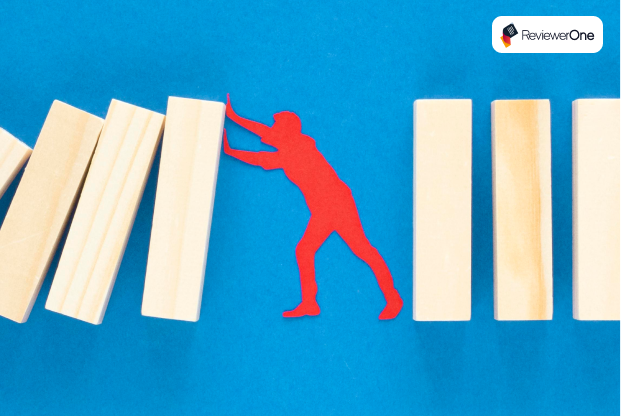
Learning that a paper you reviewed and recommended for publication has later been retracted can be unsettling. A paper retraction may raise questions about your judgment, your reviewer responsibility, and whether your assessment missed something important. In most cases, however, a retracted paper does not mean the reviewer failed.
Peer review evaluates the manuscript, supporting information, and disclosures available at the time. It is not a forensic investigation or a guarantee that every concealed problem will be detected. The most useful response is to understand why the retraction occurred, reflect on anything relevant to your manuscript review, and take action only when you have information that could help the editor.
What does a paper retraction mean?
A paper retraction means that a published article is no longer considered reliable enough to remain in the scholarly record without a clear warning. Retractions may follow major errors, fabricated or falsified data, inappropriate image manipulation, plagiarism, unethical research, duplicate publication, compromised peer review, or a serious undisclosed conflict of interest. The exact reason should be explained in the journal’s retraction notice.
The Committee on Publication Ethics retraction guidance treats retraction primarily as a way to correct the literature and protect its integrity. Its purpose is to alert readers that particular findings should no longer be relied upon. A paper retraction does not automatically mean that the authors acted in bad faith. A retracted paper may contain an honest error discovered after publication, or it may involve deliberate misconduct. It may also be affected by evidence that was unavailable when the manuscript was assessed. The Retraction Watch Database reflects this variety. It records reasons involving data, images, methods, results, ethics, authorship, conflicts of interest, and the review process. Its user guide also warns that the reason for each case must be interpreted in context rather than used to assume intent.
Does a retracted paper mean the peer review failed?
Usually, no. A retracted paper does not by itself prove that the assessment was poor or that the reviewer responsibility was not met. Reviewers work with what has been submitted. They can assess whether the research question is clear, whether the methods appear appropriate, whether the conclusions follow from the reported results, and whether visible ethical or reporting concerns need to be raised. A standard manuscript review does not usually provide access to laboratory records, complete source data, original image files, participant records, or undeclared personal and financial relationships.
What was your responsibility as a reviewer?
Your reviewer responsibility was to assess the submitted work carefully, fairly, and within your area of expertise. You were expected to conduct the manuscript review in good faith, identify concerns you could reasonably see, explain why they mattered, and give the editor an evidence-based recommendation. Your responsibility did not normally include:
- Independently verifying every data point
- Reproducing the complete analysis
- Authenticating every image against its original file
- Auditing how the study was conducted
- Investigating undeclared author relationships
- Proving that misconduct had occurred
Unless the journal specifically requested a specialist integrity check, these activities usually fall outside an ordinary review. If the paper retraction resulted from information that was concealed or unavailable, there is no reasonable basis for treating it as your failure. A retracted paper may expose a weakness in the wider publication process without showing that every person involved failed to meet their responsibilities.
What should you do after learning about the retraction?
In most cases, no formal action is required. Read the notice, understand the stated reason, reflect briefly on anything relevant to your original assessment, and carry the useful lesson into future reviews.
Read the retraction notice carefully
Start with the journal’s official notice. Do not rely only on headlines, social media discussions, or assumptions about why the article was withdrawn. The notice may distinguish between honest error, research misconduct, duplicate publication, inappropriate authorship, compromised review, or concerns that emerged after publication. That distinction matters when considering whether the issue could reasonably have been identified earlier.
Compare the reason with what you reviewed
Consider whether the problem appeared in the version you received and whether it would reasonably have been detectable during manuscript review. This helps separate genuine reviewer responsibility from hindsight. Information can look obvious after an investigation has uncovered it, even when it was not apparent during the original assessment. For example, an inconsistency in the methods and results may have been visible in the text. Fabricated source data beneath a plausible set of results would usually not have been.
Review your report only through authorized channels
If the journal still gives you access to your report and the submitted files, you may review what you wrote and whether you raised related concerns. Confidentiality continues after the review has ended. Do not use unauthorized personal copies, share the manuscript with colleagues, or disclose editorial correspondence publicly. A useful reflection might involve asking:
- Did the concern fall within my expertise?
- Did I identify a related issue but underestimate its importance?
- Was the problem hidden behind information I could not verify?
- Is there one practical check I should add to future reviews?
ReviewerOne’s article on research integrity in action offers additional guidance on transparency, reporting, ethical disclosures, and the role reviewers can play in strengthening reliable research.
Contact the editor only when you can add useful information
You may contact the editor if you raised a relevant concern that was not acted upon, have since encountered evidence connected to the case, or can clarify an aspect of your report that may help an investigation. Keep the communication factual and confidential. Explain what you observed, where it appeared, and why it may be relevant. Avoid making assumptions about the authors, editor, or other reviewers. You are not generally required to issue a public statement, contact the authors, or defend your recommendation. Public discussion may breach confidentiality or interfere with an ongoing research integrity investigation.
Key takeaways
A paper retraction does not automatically mean that you failed as a reviewer. Your reviewer responsibility was to assess the submitted material, apply your expertise in good faith, and report concerns that could reasonably be identified at the time. Read the official notice, consider whether the reason was visible during manuscript review, and contact the editor only when you have specific information that may help. Where there is a useful lesson, treat it as part of professional development. A retracted paper can reveal the limits of peer review while also demonstrating why research integrity depends on several checks before and after publication.
Frequently Asked Questions
Does a paper retraction mean the reviewer made a mistake?
Am I responsible for a retracted paper I recommended for publication?
Should I contact the editor after a paper is retracted?
Can I discuss the retracted paper publicly?
How can a retraction improve my future manuscript review process?
Try it live
ReviewerOne supports reviewers with structured guidance and AI-assisted tools that reduce the mechanical burden of manuscript review while keeping expert judgment at the center. The platform includes support for reference integrity, methodological concerns, ethical red flags, training, and reviewer development. Sign up for ReviewerOne’s AI-assisted peer review platform and build a more consistent, informed, and confident review process.